Prince William Sound | Squidding & Exploring
Video uploaded to YouTube May 31, 2024 | posted to alaskanomad.com on February 23, 2026
Less than two weeks before my very surprising heart attack, I posted this video of one of an incredible trip with my middle son, Connor.
Connor and I headed into Prince William Sound with the kind of plan that’s half itinerary, half “let’s see what happens.” We based out of the Paulson Bay cabin in Cochrane Bay (a recreation.gov cabin), then spent our days bouncing between exploring coves, glassy runs, and the simple mission of find squid, maybe find bears, and learn how to use the new Ista360x4 in the real world.
Every shot you’re seeing was captured on the Insta360 X4, and it was the first time I ever edited in Adobe Premiere. If you’ve used an Insta 360 camera, you already know: filming is easy… and editing is where you pay the price. But, hey... if you want to check out the latest version of the Inta360 cameras which are better than the x4, here's an affiliate link to the Amazon Insta 360 Store.
What I loved about the Insta360 X4
Positives:
Insanely flexible framing: one clip can become wide, tight, panning, or “third-person” depending on how you reframe it later.
Great for boats: when things get bouncy and unpredictable, capturing everything matters more than perfect composition.
Creative freedom: it’s the closest thing I’ve used to “shoot now, decide later.” -and comes at a HUGE time price later.
What I Disliked about the Insta360 x4
Negatives (these are, by far, not unique to me):
Reframing time: 360 footage demands an insane amount of extra time & steps, especially if you want intentional movement and clean video. For most people who would be drawn to use these as simple solutions to capturing 'everything' without much consideration for composition, framing, and other issues, this is, in fact, the answer. However, the time investment to get the footage into the correct format, frame, and content a person would want when editing... it is truly impractical, in my opinion. I understand that people get better at it, that those who invest the upfront time to take better shots at recording, and all those other issues can be resolved with more care. But at that point, the promotional and product marketing materials break down.
8k technicalities: I was aware of the 8k technicalities... meaning that the entire 360 globe is 8k. That means that a normal 16:9 framing of that footage is closer to 4k-ish. But, if set to feel less fish-eye like is really 2.5k. Any footage that I wanted to zoom in on (like a whale tail) ended up being so grainy.
Software dependence: early on, it felt like you had to live inside Insta360’s workflow (or jump through hoops in Adobe Premiere). I ended up preferring DaVinci Resolve. So, this wasn't convenient. This was my first and last real video with an Insta360x4. I sold it due to inconvenience; better tools are available if a person is willing to give more thought to the recording.
All That Being Said...
I am not a pro. I am an amateur, trying to learn and grow. I am willing to share pain points and parts I liked. At this point in my journey, I wasn't diving into all the weeds on Log, Raw, 8k, and so on. I wanted helpful, easy tools that would capture content that I may have missed otherwise.
I did have a heart attack two weeks later that set my whole Alaska Nomad journey on a pretty big hiatus. So, maybe I should have given it more time and attempts. I already had a DJI Osmo 4 and a DJI Mini Pro 4. I decided to focus on utilizing them better before graduating to other gear. My understanding is that a lot of those pain points have improved over time.
Insta360 has continued to push firmware updates for the X4, and they’ve also expanded editing options—especially for Premiere users—with tools like the Insta360 Reframe pluginthat’s designed to streamline the “import + reframe” process. They also launched new Insta360 cameras.
"Two years later” note
I’m not planning to retroactively review every piece of gear I’ve ever used. But I am open to sharing real-world, non-professional impressions as I learn, especially when something genuinely helps (or slows) the process.
For anyone shopping today (and still wanting an Insta360), I’ll include an affiliate link to Insta360’s newest flagship 360 camera line (current-gen models like the X5<). If you’re in research mode, here are a few “watch before you buy” NON-SPONSORED review videos worth searching on YouTube.
- “UNSPONSORED 360 CAMERA REVIEW | NO BS…” (X5)
- “100 Days with the Insta360 X5: HONEST REVIEW”
- “My Favorite Insta360 Gear Right Now! – 2026 Buyer’s Guide”
I would try it again with some of the updates they've had. But I wouldn't want to pay that amount again for it. Maybe some year in the future, I will.
If you watch the original video, I’d love to hear what stood out: the cabin life, the squidding, the Sound, or the camera experiment.

Sugpiaq (Alutiiq) Land Map
View a map of the Indigenous Peoples and Languages of Alaska.

Land Acknowledgement Information
All of the land we boated through is Alutiiq/ Sugpiaq homeland.
To learn more about the people, visit the Alutiiq Museum's website.
"Alaska Nomad: A nomad is historically one who does not stay long in the same place, a wanderer, one who looks for fresh and new places to explore. Rather than being considered homeless, a nomad is a person who feels at home wherever that person is, travels, explores, adventures, and experiences life."
Jason Evoy - Alaska Nomad
Alaska Nomad exists to share honest moments like this—learning, paying attention, and finding meaning in the middle of everyday life. If you’d like to connect more, you’re welcome to subscribe to the newsletter. I share reflections there that don’t always make it onto social media.
You Might Also Like...
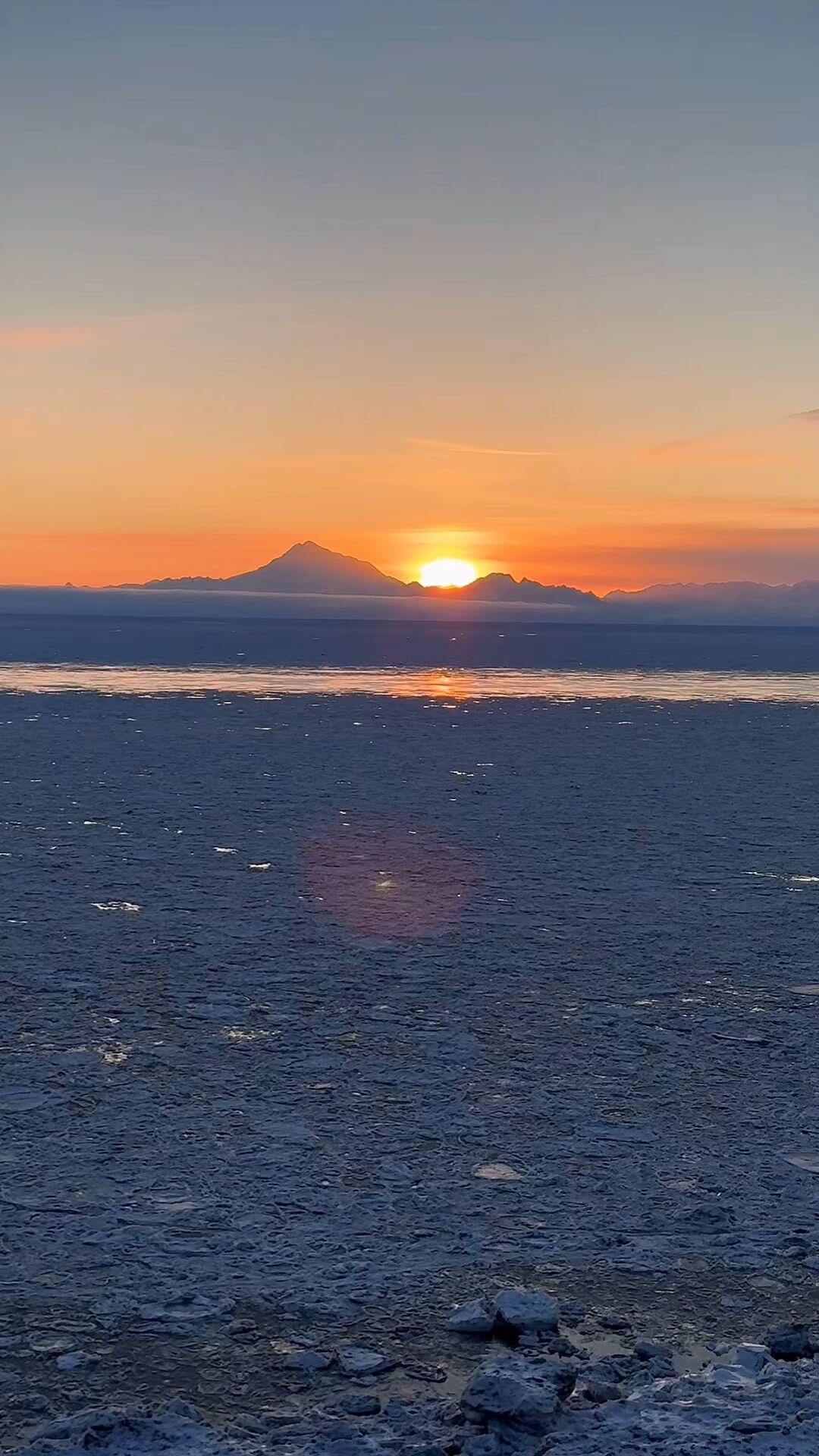
Ice & Fire All Across the Sea 🧊🔥🏔️
An “ice and fire” sunset over the frozen Cook Inlet with vibrant colors and clear mountain views from the coast of the Kenai Peninsula during a quiet winter evening.
Spring is on the Calendar: Coming Soon!
A walk through the impressive ice formations along the Cook Inlet. We wait for the arrival of spring as the ice begins to ‘rot’ and melt!
Venus flashes over Mount Redoubt
Venus flashes above Mount Redoubt in this quick look at a winter evening over the Cook Inlet. I caught the moment the focus clears to reveal the volcano and the planet shining over the shifting ice flows.